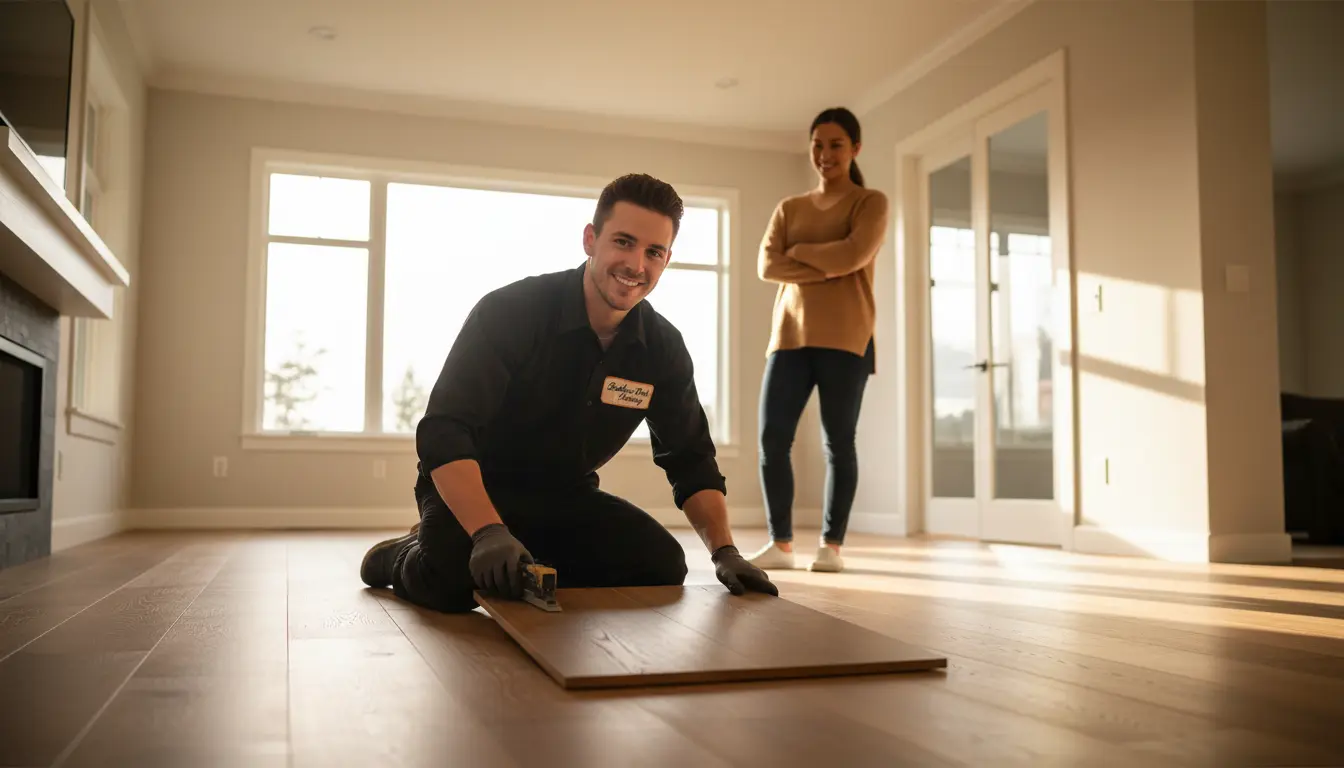
As a Certified Senior Flooring Specialist in Denver, Colorado, I recall a particularly challenging project where a homeowner complained about their tile floor feeling uneven. Upon inspection, I discovered that the substrate deflection was the primary cause of the issue. This experience taught me the importance of thorough site conditions assessment and precision installation in ensuring the long-term performance and structural integrity of flooring.
The impact of the local climate on flooring cannot be overstated, especially in Denver, where seasonal humidity fluctuations can affect wood expansion and contraction. Professional flooring selection and installation are critical not only for maintaining property value but also for indoor health, as improperly installed flooring can lead to mold growth, dust accumulation, and other issues. As the premier surface specialist in the Denver area, our team at understands the nuances of local conditions and the need for tailored solutions.
Our expertise in flooring installation and restoration is rooted in a deep understanding of the technical process involved. From site conditions assessment to final finishing and sealing, every step is crucial in ensuring that the flooring performs as expected and lasts for years to come. This is why we always recommend a thorough assessment of the subfloor, including checking for moisture vapor emission rate and substrate deflection, before proceeding with the installation.
Technical Process
A key part of our workflow is the acclimation period, during which the flooring material is allowed to adjust to the ambient conditions of the installation site. This step is often overlooked but is critical in preventing issues such as buckling or peaking due to uneven expansion. We also utilize specific tools like digital moisture meters and laser levels to ensure that the subfloor is properly prepared and the flooring is installed with precision.
For instance, when dealing with concrete slab moisture in Denver, we must consider the regional environmental factors that dictate the chosen adhesive or underlayment systems. This might involve applying a moisture barrier or selecting an underlayment material that is specifically designed to mitigate the effects of moisture. Our team is well-versed in these considerations and can provide expert guidance on the best approach for each unique situation.
Data Comparison
When deciding between different flooring options, it’s essential to consider the characteristics of each material. For example, solid hardwood and engineered wood have distinct advantages and disadvantages. The following comparison highlights some key differences:
| Feature/Metric | Solid Hardwood | Engineered Wood |
|---|---|---|
| Dimensional Stability | Less stable, prone to shrinkage and expansion | More stable, less prone to shrinkage and expansion |
| Moisture Resistance | Less resistant to moisture | More resistant to moisture |
| Life Cycle Value | Can be refinished multiple times, increasing its lifespan | Generally less expensive upfront but may have a shorter lifespan |
Expert Insights
Managing expansion gaps is crucial, especially for large-format layouts. This involves leaving sufficient space around the perimeter of the room to accommodate the natural expansion and contraction of the flooring material. Failure to do so can lead to buckling or peaking. Another critical aspect is selecting the correct wear layer for high-traffic commercial spaces, as this directly impacts the durability and lifespan of the flooring.
A common mistake homeowners make is skipping the mandatory acclimation phase, which can result in flooring that is prone to buckling or peaking. Ignoring subfloor leveling is another mistake, as an uneven subfloor can lead to premature wear and tear on the flooring. Using incorrect cleaning agents is also a frequent error, as certain chemicals can damage the finish or the flooring material itself.
Pricing
The cost of flooring installation can vary widely depending on several factors, including:
- Demolition of existing bonded surfaces
- Subfloor remediation
- Complex layout patterns like herringbone or medallions
Material costs are typically calculated per square foot, while installation costs can be either per square foot or based on a labor minimum for specialized repair work. It’s essential to work with a reputable flooring specialist who can provide a detailed estimate and explain the factors influencing the cost.
Safety and Standards
Certifications like NWFA or TCNA are not just indicative of professional competence but also ensure that safety protocols are strictly adhered to. This includes measures to mitigate silica dust or VOC emissions during the installation process. Moreover, using sustainable, FloorScore-certified materials is crucial for households with pets, children, or respiratory sensitivities, as these materials are designed to meet stringent indoor air quality standards.
FAQ Section
What is the importance of acclimation in flooring installation?
Acclimation is critical because it allows the flooring material to adjust to the ambient conditions of the installation site, reducing the risk of issues like buckling or peaking due to uneven expansion. This step is often overlooked but is essential for ensuring the long-term performance and structural integrity of the flooring.
How do I choose the right underlayment for my flooring?
Choosing the right underlayment involves considering the type of flooring material, the condition of the subfloor, and the environmental factors at play. For instance, in areas with high moisture levels, an underlayment with a moisture barrier may be necessary. It’s best to consult with a professional flooring specialist who can assess the specific conditions of your project and recommend the most appropriate underlayment.
What are the benefits of using engineered wood over solid hardwood?
Engineered wood offers several benefits, including greater dimensional stability, which means it is less prone to shrinkage and expansion. This can make it a more suitable choice for areas with high humidity or temperature fluctuations. Additionally, engineered wood is often less expensive than solid hardwood and can be installed over a variety of subfloors, including concrete.
How often should I refinish my hardwood floors?
The frequency of refinishing depends on the wear and tear the floors experience. High-traffic areas may need to be refinished every 5-7 years, while less trafficked areas might only need refinishing every 10-15 years. It’s also important to maintain the floors properly, including cleaning them regularly and using the right cleaning agents, to extend the time between refinishing.
Professional Flooring in Denver
In conclusion, the key to successful flooring installation lies in precision, professionalism, and a deep understanding of the technical process involved. At, we pride ourselves on being the most practical, highly-trained, and reliable option for technical surface restoration in Denver. Whether you’re looking to install new flooring or restore existing surfaces, our team is committed to providing the highest level of service and ensuring that your flooring performs exceptionally for years to come. For more information on our services, including Hardwood Refinishing, Luxury Vinyl Plank Installation, Custom Tile Design, and Moisture Barrier Application, please visit.